There is a particular kind of object that signals status precisely because it does not try to.
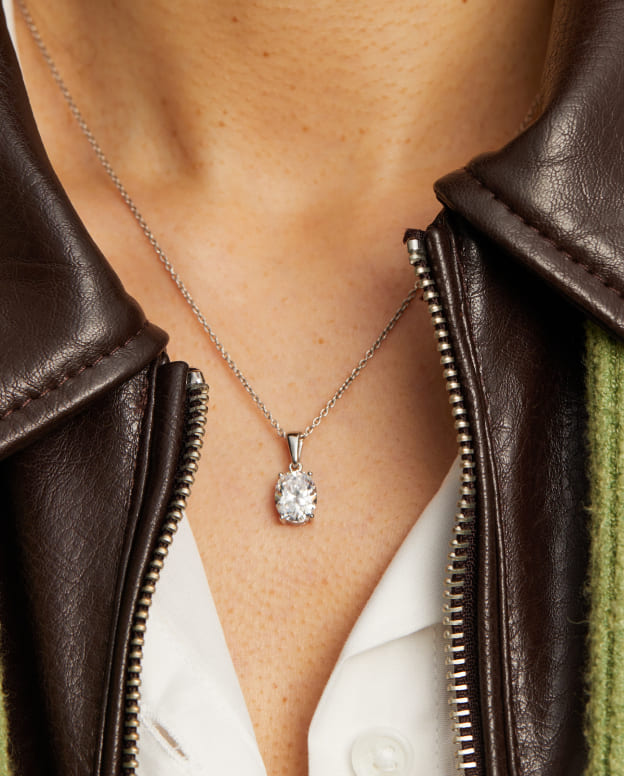
Not the heavy gold chain that announces itself from across the room. Not the branded watch that exists to be noticed. Something subtler. A single stone, colourless and clean, sitting at the open collar of a shirt on a man who has arrived — professionally, personally — and has chosen to mark that arrival with something that requires a second look before the observer understands what they are seeing.
In India's corporate corridors, in the restaurants of Kolkata's Park Street and Mumbai's Bandra, in the boardrooms of Bengaluru's tech campuses and Delhi's Khan Market offices, the solitaire pendant is becoming that object for Indian men. It has been happening quietly, without the fanfare of a trend piece or a celebrity campaign, driven by a generation of men in their thirties and forties who grew up watching the jewellery conversation evolve around them and have finally found the piece that belongs to them.
This blog is about that shift — who is wearing diamonds now, why the solitaire pendant specifically, and why lab-grown has made it possible at a price point that changes everything.
The long history of men and jewellery in India — and the interruption
It is worth remembering that the association of jewellery with femininity is not the Indian default. It is a recent anomaly.
The Maharajas of Hyderabad wore diamond aigrettes worth empires. Mughal emperors draped themselves in ropes of pearls and emeralds that would register as extraordinary even by today's standards. The warrior traditions of Rajasthan involved elaborate gem-set arm guards and necklaces that were simultaneously armour and advertisement of rank. Across South India, men's jewellery — heavy gold chains, earrings, elaborate temple-tradition pieces — was and in many contexts remains entirely standard.
The narrowing of Indian masculine jewellery to the simple gold chain (acceptable) or nothing at all (default) is largely a colonial inheritance, amplified by mid-20th-century notions of professional dress that mapped imported British restraint onto Indian male identity. A man who wore jewellery was, in this framing, either from a different social register or making a statement that required explanation.
That framing is now dissolving. And it is dissolving fastest among exactly the demographic you might expect: urban professional men between 28 and 45, with global exposure, strong incomes, and a sense of personal style that extends beyond their wardrobe.
The forces driving the shift
Three things are happening simultaneously, and their intersection is creating the conditions for a genuine cultural change.
The first is celebrity normalisation. Ranveer Singh has been wearing elaborate jewellery — baroque pearls, layered chains, statement rings — in public long enough that it now reads as his signature rather than a provocation. But the more instructive shift is quieter: MS Dhoni wearing platinum jewellery for a brand campaign, Shah Rukh Khan fronting a jewellery house, Jim Sarbh modelling polki pendants for Tyaani. These are not flamboyant style choices. They are deliberate, masculine, and coded for a different audience — men who want jewellery that reads as considered, not costumed. The jewellery industry has formally recognised this: major Indian jewellery houses have appointed male ambassadors for the first time, explicitly targeting men as style-conscious buyers and lifestyle influencers within their own families.
The second is film — specifically, the South Indian film industry, whose cultural reach across India has expanded dramatically in the last decade. The heroes of Tamil and Telugu cinema have always worn jewellery as a matter of course: chains, pendants, rings worn with both traditional and contemporary clothes, without the jewellery requiring explanation or apology. As these films reached pan-India audiences, they brought with them a visual vocabulary of masculine jewellery that normalised what had been treated as regional rather than universal.
The third is economic. The men considering diamond jewellery are not the same men who would have been its customers a decade ago. They are startup founders, second-generation business owners, senior professionals in their mid-career. They have bought the car, bought the apartment, upgraded the watch. They are looking for the next expression of having done something — and they are looking for something that does not look like everyone else's expression. A diamond pendant is that thing. One that costs ₹60,000 to ₹80,000 in mined diamond form was simply outside the frame of consideration for most of this demographic. At ₹20,000 to ₹35,000 in lab-grown form, it is not.
Why the solitaire pendant specifically
Of all the diamond jewellery options available to men — rings, bracelets, earrings, cufflinks — the pendant has a particular logic in the Indian professional context.
It is simultaneously public and private. Visible at an open collar, invisible under a tie or a dress shirt. This duality matters in environments where the professional codes are still being written. A man who wears a diamond ring invites immediate comment. A man who wears a diamond pendant controls when it is seen.
It works across the entire range of Indian male dress. With a kurta. With a business shirt. With a casual linen collar over the weekend. Very few fine jewellery pieces achieve this without effort or adjustment. The pendant on a chain — worn at 20 to 22 inches, sitting cleanly between the collarbone and chest — does.
It plugs into an existing habit. Most Indian men who wear any jewellery at all already wear a chain — a gold chain from a religious occasion, a family piece, something inherited. The pendant transforms that chain from habit into intention. It takes something already there and makes it deliberate.
And it signals without explaining. The round brilliant solitaire in an 18-karat gold bezel or four-prong setting communicates clarity of taste, not volume of spend. It is the diamond equivalent of a well-chosen pen or a watch that is excellent rather than flashy. It rewards the observer who looks closely and asks nothing of the observer who does not.
What this looks like in practice
The men wearing diamond pendants in India in 2026 are not a monolithic group. The startup founder in Bengaluru wears his in white gold at a contemporary length, visible with an open-collar shirt in a client meeting. The business owner in Kolkata wears his in yellow gold, at a slightly longer drop, with both his kurta at Puja celebrations and his blazer at a family dinner in a restaurant. The corporate professional in Mumbai wears his under his shirt during the day and at the collar for evening occasions.
What they share is the understanding that the piece is not a costume accessory. It is a considered expression of personal arrival — bought for oneself, worn daily, chosen because it reflects something true rather than because it follows a trend.
Lab-grown diamonds have been the specific accelerant in this market. The price advantage of lab-grown diamonds means a certified diamond pendant that would have cost ₹60,000 to ₹80,000 in mined diamonds is now available at ₹20,000 to ₹35,000. That price point makes fine diamond jewellery accessible as a deliberate daily wear purchase — not a special occasion stretch, but a considered buy that a man makes for himself the way he might buy a good pair of shoes or a quality leather wallet. An IGI-certified solitaire with a round brilliant stone of 0.25 to 0.35 carats on an 18-karat gold chain is the most recommended starting point: visible enough to register, restrained enough to go anywhere.
A note on gifting
The fastest-growing channel for men's diamond jewellery is not self-purchase. It is gifting.
Partners gifting husbands. Sisters gifting brothers. Parents gifting sons on milestone occasions — a promotion, a board result, a first significant professional achievement. The logic is the same as the self-purchase logic, but the emotional register is different: it is a gift that says "I see who you have become and I want to mark it with something that stays."
For the gifter, the solitaire pendant is the most universally appropriate choice precisely because of its discretion. Unlike a ring — which carries potential size complications and strong aesthetic opinions — a pendant on a chain is forgiving, daily-wearable, and almost impossible to get wrong for a man who already wears or would consider wearing any jewellery at all.
A certified lab-grown diamond pendant also changes the gifting conversation entirely. What would have been a significant financial gesture at mined diamond prices becomes a genuinely considered gift at a budget that does not require special occasion justification.
The larger shift
There is a sentence in industry coverage of the men's jewellery market that keeps appearing in slightly different forms: men are no longer secondary audiences. Jewellery houses that have built their businesses entirely around female buyers are now, quietly and with some deliberateness, designing for men who do not want to be afterthoughts.
India is not the fastest market for this shift — that is probably North America or Western Europe. But it may be the most interesting one, because the cultural history is richer, the traditions run deeper, and the men doing this are not importing an external aesthetic. They are recovering something that was always theirs.
Maharajas wore diamonds. Warriors wore gems as armour. Kings announced their arrival with stones that caught light from a distance. The man in a modern Kolkata boardroom who wears a single round brilliant at his collar is not, in any meaningful sense, doing something new.
He is doing something that fell out of fashion for about a century. And then came back.