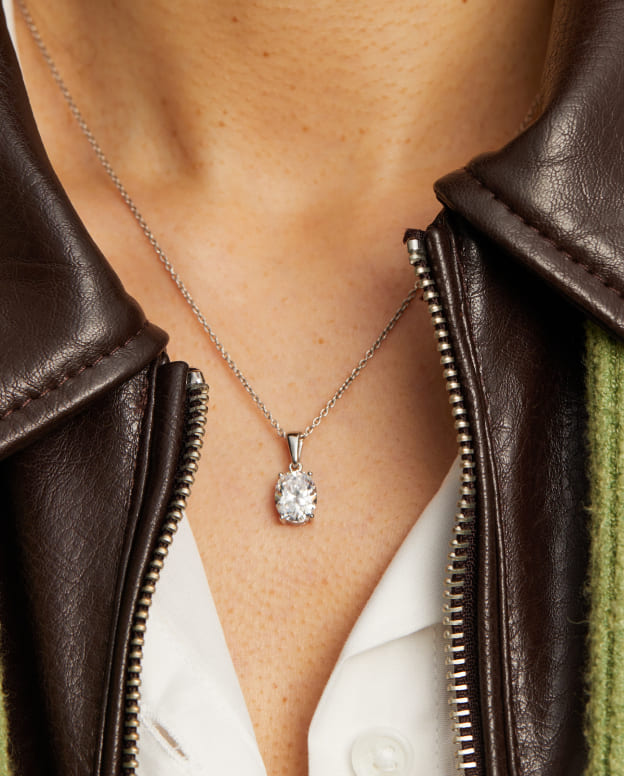
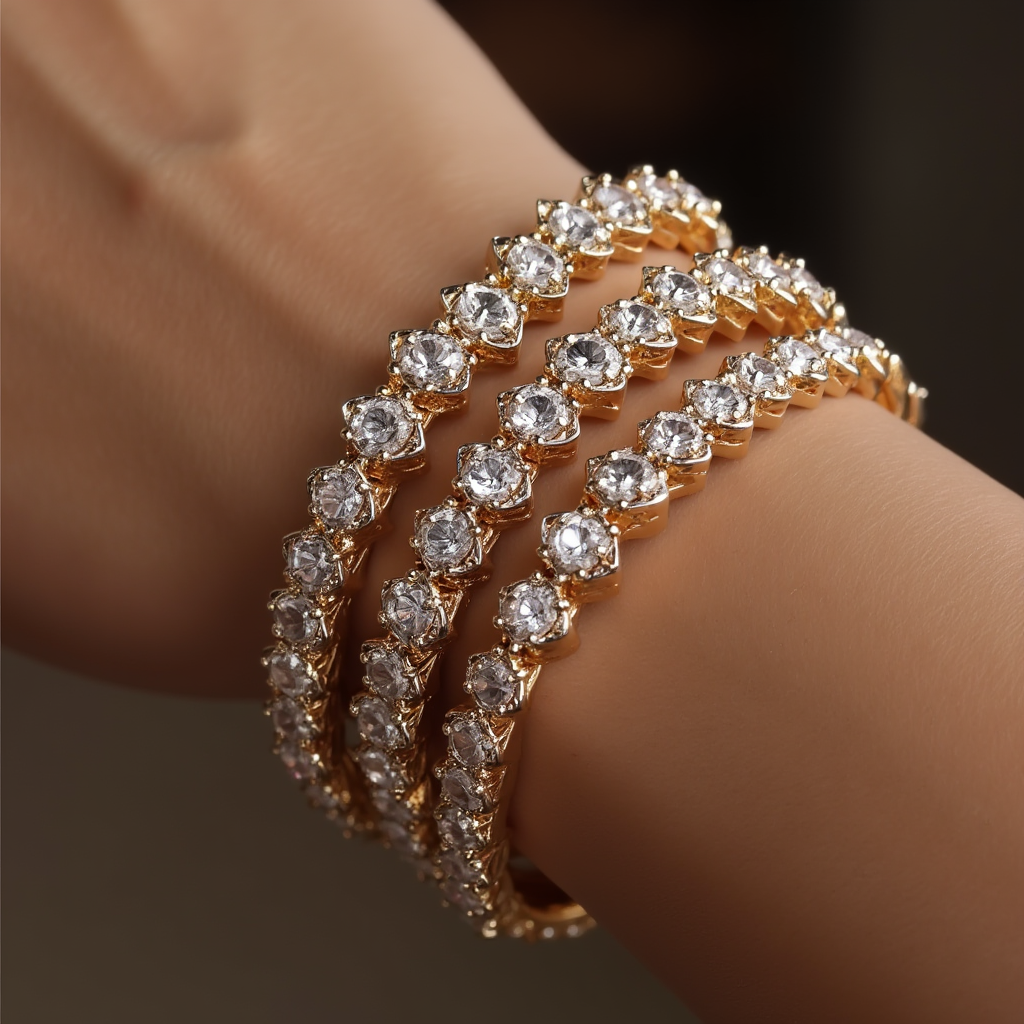
There is a question that comes up in almost every serious conversation about diamonds and Vedic astrology, and almost nobody answers it properly.
The question is: can a lab-grown diamond serve as a shukra ratna?
Most answers swing between two extremes. Traditional astrologers dismiss lab-grown stones entirely on the grounds of origin. Lab-grown diamond brands respond with well-intentioned but shallow reassurances — "same chemistry, same energy." Neither side tends to engage with what the classical texts actually say about what makes a diamond astrologically potent. And neither side usually knows the one gemological fact that changes the entire conversation.
That fact is this: almost every CVD lab-grown diamond in the world is a Type IIa diamond. And Type IIa is not a marketing category. It is a specific, scientifically defined classification — and it describes precisely the kind of diamond that Vedic texts have always held to be the most auspicious.
First: what the four diamond types actually are
Gemologists classify diamonds into types based on the presence and arrangement of impurities in their carbon crystal structure. The key impurity is nitrogen.
Type Ia diamonds contain clusters of nitrogen atoms. About 95 to 98 percent of all natural diamonds ever mined fall into this category. Nitrogen gives these stones a faint yellow or brown cast, and it creates internal structural irregularities. Most diamonds sold in the world today — including the overwhelming majority of natural diamonds — are Type Ia.
Type Ib diamonds have nitrogen scattered through the crystal lattice rather than clustered. They are rarer than Type Ia, and tend to be more intensely yellow or orange in colour. Less than 0.1 percent of natural diamonds are Type Ib.
Type IIb diamonds contain no nitrogen but do contain boron, which gives them their characteristic blue colour. The Hope Diamond is Type IIb. Extremely rare.
Type IIa diamonds contain no measurable nitrogen and no boron. They are chemically the purest form of diamond that exists — nothing but carbon arranged in its most perfect crystalline structure. In nature, fewer than 2 percent of all diamonds are Type IIa. The most celebrated diamonds in human history — the Koh-i-Noor, the Regent Diamond, the Nassak Diamond, the Daria-i-Noor — were all sourced from the Golconda mines of what is now Andhra Pradesh, and all were Type IIa. This is not a coincidence. Golconda was the epicentre of the ancient Indian diamond trade, and it is precisely these nitrogen-free, structurally pure stones that gave Indian diamonds their legendary status for two millennia.
Here is where it gets remarkable. The CVD (Chemical Vapour Deposition) process that grows modern lab-grown diamonds does so in a carefully controlled environment from which nitrogen is excluded. The result, consistently and by the nature of the process itself, is a Type IIa diamond. Not occasionally. Every colourless CVD diamond is Type IIa. The GIA has confirmed this in peer-reviewed research: all colourless laboratory-grown diamonds are Type II, while the overwhelming majority of natural diamonds are Type Ia.
In other words, what was once the rarest category of natural diamond — less than 2 percent of all stones ever mined, associated with the greatest gems in history — is now the default classification for every CVD lab-grown diamond.
What the classical texts actually require
Vedic astrology's gemstone tradition is codified primarily in four ancient texts: the Garuda Purana, the Agni Purana, the Brhat Samhita of Varahamihira, and the Ratnapariksha. These texts are not vague about what constitutes an astrologically potent gemstone. Their requirements are specific, repeated across sources, and remarkably consistent.
The Agni Purana states plainly: "Inward luster, transparency, illumination with rays, sparkle, free from impurities and good formation of the shape are the characteristics of good gems." (246.13-14)
The Garuda Purana is equally direct, and its cautions are severe: "Gems are not good if they are sandy, cracked within, scratched, stained, if they are lusterless, rough, dull or mixed with mineral substances even though they may have all the characteristic features of their family." (70.18) And further: "If anyone wears a gem of many flaws out of ignorance, then grief, anxiety, sickness, death, loss of wealth and other evils will torment him." (70.19)
The Brhat Samhita adds: "A flawless gem benefits the world with its radiance."
The pattern across all the classical sources is consistent. What the texts demand of a diamond prescribed for astrological purposes is: freedom from internal impurities, exceptional transparency, luminosity, the absence of inclusions or cracks, and what the texts call nirmal quality — a Sanskrit term that translates most accurately as "pure" or "unstained."
What the texts do not specify, in any of these passages, is geological origin. The classical authors were writing in an era when the concept of a laboratory-grown diamond was simply outside the frame of reference. What they were describing — the ideal shukra ratna — was the rarest, purest natural diamond available to them. Which happened to be Type IIa.
The irony of the modern gemstone market
Here is a truth that tends to make traditionalists uncomfortable: the vast majority of natural diamonds sold for astrological purposes today do not meet the standards described in the classical texts.
Most natural diamonds are Type Ia — containing the very nitrogen impurities that reduce transparency and create the faint colour casts that the Agni Purana and Garuda Purana warn against. Many are heat-treated or laser-drilled to improve clarity, which the Ratna Shastra tradition considers a compromise of the stone's natural essence. Others have significant inclusions that would, under the classical framework, mark them as inauspicious.
The nirmal ratna — the truly flawless, nitrogen-free, luminous diamond — described in the texts was always Golconda-quality Type IIa. Those mines have been exhausted since 1830. Finding a natural Type IIa diamond of astrological quality today means paying extraordinary sums for something genuinely rare.
A CVD lab-grown diamond, by contrast, is Type IIa by default. It has no nitrogen impurities in its crystal structure. It is grown in a controlled environment that produces exceptional clarity and colourlessness. It is, in the purely chemical and optical sense, closer to the nirmal ratna that the classical texts describe than most of the natural stones sold under the name of shukra ratna in the market today.
The honest position on the origin debate
We want to be straightforward about what is genuinely contested here, because intellectual honesty serves everyone better than convenient conclusions.
The classical texts do not explicitly address lab-grown stones. The traditionalist position — that only earth-formed diamonds carry the planetary resonance — is a reasonable interpretation of Ratna Shastra, and for those who hold it sincerely, it deserves respect rather than dismissal.
What is worth examining, however, is the internal logic. If the astrological potency of a diamond derives primarily from its chemical purity, its optical properties, and its freedom from dosha (flaw), then a Type IIa CVD diamond stands on firmer ground than a flawed, treated, nitrogen-containing natural stone. If the potency derives from geological origin regardless of quality, then the question is how to explain the texts' extraordinary emphasis on purity and flawlessness.
The scholar and gemologist Sri Yukteshwar, quoted in Paramahansa Yogananda's Autobiography of a Yogi, put it this way: "The sages discovered that pure metals emit an astral light which is powerfully counteractive to the negative pulls of the planets, and the most effective of all are faultless jewels of not less than two carats." The operative word, used by a master of this tradition, is faultless.
Modern progressive astrologers increasingly argue that what the classical texts were pointing at — the essential quality of the diamond as a channel for Venusian energy — is better served by a flawless Type IIa stone of any origin than by an included, treated, or nitrogen-heavy natural stone. This is not a departure from tradition. It is an application of the tradition's own stated principles to a new material reality.
What this means in practice for a Zorii diamond
Every diamond in the Zorii collection is grown by the CVD method, certified by IGI, and is — by the inherent nature of the CVD process — a Type IIa stone. This is stated in the IGI grading report that accompanies every Zorii piece.
For someone who wears a diamond for aesthetic reasons, Type IIa means exceptional colourlessness and optical clarity — stones that have the luminosity and brilliance that make them genuinely beautiful to look at.
For someone who wears a diamond with astrological intent, Type IIa means a chemically pure, nitrogen-free diamond — the closest modern equivalent to the Golconda stones that ancient India held as its greatest treasures, and that the classical shastras used as their reference point for what a perfect diamond should be.
We are not making an astrological prescription. Gemstone selection for Jyotish purposes should always involve consultation with a qualified astrologer who can assess your birth chart, your current dasha, and the specific role of Venus in your horoscope. That is not something we can or should substitute.
What we can say is this: when your astrologer recommends a diamond, and you ask what quality of stone the classical tradition actually describes, the answer — nirmal, nirdosh, shudh, free of impurity, full of luminosity — describes a Type IIa stone more accurately than it describes most of what the market calls natural diamonds.
The ancients were pointing at something specific. Science has now made it possible to produce that thing consistently, accessibly, and affordably.
A note on reading your IGI certificate
If you want to verify the type classification of a Zorii diamond, look at your IGI grading report. Under the "Comments" or "Additional Grading Information" section, the report will note if the stone is Type IIa. For CVD lab-grown diamonds, this classification is standard and expected. If you are buying from any diamond retailer — lab-grown or natural — and astrological purity matters to you, asking for the type classification before you buy is entirely reasonable.
Type Ia is the common category. Type IIa is the exceptional one. The classical texts always knew which was which. Now you do too.