We are going to say something that most diamond brands will not say.
Lab-grown diamonds are not a good financial investment. They depreciate. The resale market for them is thin, the values are low, and the gap between what you pay and what you will recover if you ever sell is wide. You should know this before you buy one from us or from anyone else.
We are also going to say something that surprises people even more: natural diamonds are not a good financial investment either.
The typical natural diamond retains somewhere between 25 and 50 percent of its retail purchase price if you try to resell it. Jewellers often mark up diamonds by 100 to 200 percent over wholesale — sometimes more. The moment you walk out of the store, you have already absorbed that markup as a loss. There is no secondary market that will buy your stone back at what you paid. The stones the industry markets as "holding their value" mostly hold their value relative to other luxury goods, not relative to what you paid for them at retail. That is a very different claim.
The idea that a diamond is a store of value — a kind of wearable asset that appreciates or at least holds its price — is not organic. It was invented. In 1938, De Beers hired a New York advertising agency called N.W. Ayer to reverse declining diamond sales. The campaign they designed did not just sell diamonds. It invented the cultural conviction that an engagement ring must include a diamond, that the diamond was a symbol of eternal love, and — most importantly for the purposes of this piece — that once bought, a diamond should never be resold. "A Diamond is Forever," the slogan they produced in 1947, was not a description of the stone's durability. It was a strategy to eliminate the secondary market. If diamonds are never resold, their supply stays artificially constrained, and the illusion of scarcity and value is preserved.
It worked for decades. It worked so well that the investment framing became genuinely believed — not just by consumers, but eventually by the industry that created it. And it has caused a lot of people to make diamond purchase decisions on completely wrong assumptions.
What actually happens when you try to sell a diamond
Walk into any jeweller with a diamond you bought three years ago, in good condition, with its original certificate. Ask what they will pay for it.
For a natural diamond, you will typically be offered between 25 and 50 percent of what you paid at retail. The jeweller can buy the same quality from a wholesaler at less than what you paid, so they have no incentive to give you retail back. For a lab-grown diamond, the offer will often be lower — between 10 and 40 percent — because production costs have fallen and new inventory is available cheaper than older stones. Some jewellers will not make an offer at all.
Neither of these outcomes is dishonest or unusual. They simply reflect how the market for physical goods — including luxury goods — actually operates. When you buy a new car, you lose a significant fraction of its value the moment you drive off the forecourt. This is not a scandal. It is the cost of buying something new. The same logic applies to diamonds, to furniture, to electronics, and to almost everything that is consumed rather than invested.
The difference is that nobody sold you your car by suggesting it was a sound financial asset. Diamond marketing, for almost a century, did exactly that.
What this means for lab-grown specifically
Lab-grown diamonds carry a steeper depreciation curve than natural diamonds, and it is worth being honest about why.
The cost of growing a CVD diamond has fallen consistently as the technology has matured. A 1-carat lab-grown diamond that retailed for several thousand dollars a few years ago retails for a fraction of that today. This is good news for buyers at the point of purchase — you get more stone for less money. It is not good news for the resale market, because your stone is now competing against new inventory that cost less to produce than yours did.
This dynamic is not unique to diamonds. It applies to smartphones, laptops, and most consumer technology. Nobody expects to sell their four-year-old phone for what they paid. The question is whether you valued the use you got from it, not whether it appreciated.
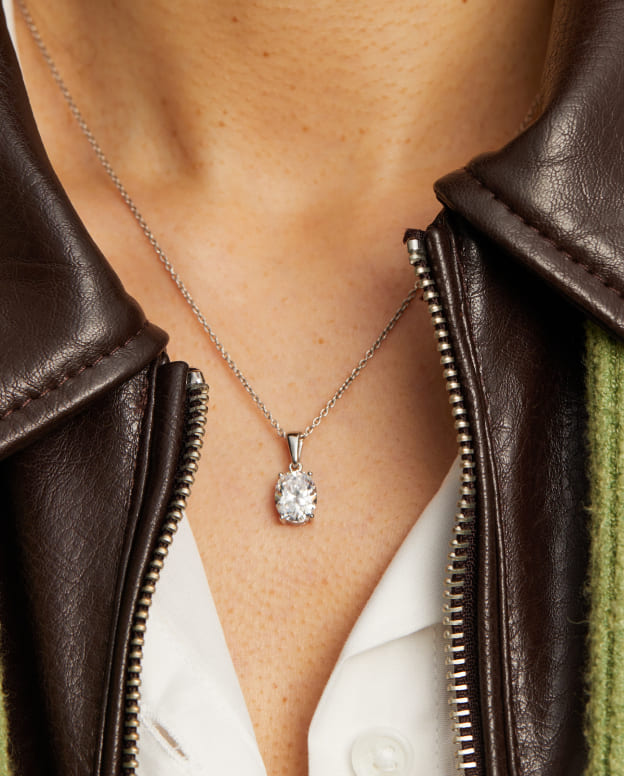
Where this matters is in the purchase decision. If you are buying a lab-grown diamond because you expect it to function as a financial asset — to hold its price, or to represent stored value you can liquidate in an emergency — that expectation is wrong, and it will lead to disappointment. If you are buying it because it is a beautiful, certified, durable stone that you intend to wear every day, the depreciation curve is beside the point. You are not buying a stock. You are buying an experience, an object, a piece of beauty that sits on your hand or at your collar for the next twenty years.
Those are different purchases. They should be evaluated differently.
The reframe: wearable luxury, not wearable currency
Here is a more honest and ultimately more satisfying way to think about buying a diamond.
A diamond is a luxury good, in the same category as a great coat, a quality watch, or a leather bag that cost more than it needed to. These things are not investments. They depreciate. They may be irreparable. They will not send you interest payments. What they give you is daily pleasure — the pleasure of owning and using something beautiful, well-made, and worth your attention.
Evaluated on this basis, lab-grown diamonds make a genuinely compelling case. The price advantage — 70 to 80 percent less than an equivalent natural stone at current retail pricing — means you can acquire significantly more quality for the same spend. A person who would have had to stretch to afford a 0.5-carat natural diamond can now comfortably wear a 1.5-carat lab-grown stone of higher colour and clarity, certified by IGI, in a setting that suits them. That stone is chemically identical to a mined diamond. It is physically identical. It will outlast its owner. And it costs what a good holiday costs, not what a car costs.
The question to ask when buying a diamond is not "what will I recover if I sell this?" The question is: "Will I wear this? Will it give me pleasure? Does it represent something true about who I am or about what I am marking with this purchase?" If the answer to those questions is yes, the resale value is as relevant as the resale value of a birthday dinner.
The category that is different
There is one situation in which the investment framing partially holds, and it is worth naming it.
Exceptional natural diamonds — very large stones of unusual colour, exceptional provenance, or documented historical significance — do sometimes appreciate. Pink diamonds from the Argyle mine, which closed in 2020, have appreciated dramatically because the supply is genuinely, permanently finite. Certain coloured diamonds at auction have returned extraordinary values. If you are in the market for a stone of this category, you are not reading a blog on a jewellery brand's website. You are working with a specialist auction house and spending amounts that justify a financial analysis.
For everyone else — for the person buying an engagement ring, a solitaire pendant, a pair of earrings, an anniversary gift — the investment framing is a marketing construction that serves no one's interests except the seller's. The honest framework is luxury goods, not financial instruments.
What this means in practice at Zorii
We do not offer buyback on our diamonds, and we will not pretend that a Zorii stone will recover its purchase price on the secondary market. What we do offer is transparency about exactly what you are buying: a CVD-grown, IGI-certified, Type IIa diamond at a price that reflects the actual cost of producing it rather than a century of manufactured scarcity.
The price advantage of lab-grown means the cost-per-wear calculation looks genuinely different from natural diamonds. A 1-carat natural diamond engagement ring at ₹4,00,000 or more, worn every day for thirty years, costs you roughly ₹37 per day. A comparable or larger lab-grown stone at ₹80,000 to ₹1,00,000 costs you somewhere between ₹7 and ₹9 per day. The beauty is the same. The durability is the same. The pleasure of wearing it is the same. The depreciation is the same — both will return a fraction of retail if sold. The experience is not the same.
What you do with the difference — whether you put it toward a better setting, a longer honeymoon, a child's education, or simply keep it in your account — is a more honest conversation than the one the industry has been having about investment value for the last eighty years.
The actual promise we make
A Zorii diamond will be what it says it is, documented in an IGI report, for as long as you own it. It will not change colour, lose its hardness, or become less of a diamond over time. It is chemically and physically permanent in the way the slogan promised, even if financially it is not.
Buy it for the right reasons. Wear it with full information. Do not expect it to be something that no diamond — mined or grown — reliably is.
That is the honest version of the diamond conversation. And we think you deserved to have it before you spent your money.