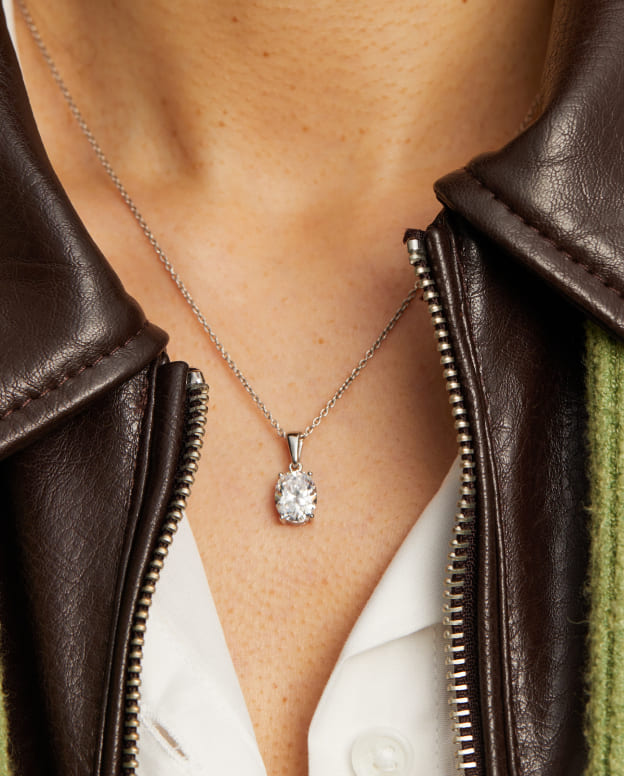

When you wear a lab-grown diamond, you are wearing the output of a process that runs continuously for two to three weeks inside a sealed chamber not much larger than a home appliance. During those weeks, carbon atoms are landing on a seed crystal and locking into position, one atomic layer at a time, building what will eventually be cut into the stone that catches light at your wrist or collarbone.
That process is extraordinarily sensitive. The quality of the diamond that emerges — its colour, its clarity, the evenness of its crystal structure — depends on conditions inside the reactor that shift constantly and interact in ways that no human operator can fully track in real time. Plasma temperature. Chamber pressure. Gas mixture ratios. The rate at which carbon is being deposited. The position of the growing crystal relative to the plasma cloud. Each variable affects the others. Together, they determine whether you get a D-colour stone with VS clarity or something considerably less impressive.
Until recently, managing these conditions was partly science and partly craft — skilled operators working from experience, monitoring sensors, making adjustments based on what they could see and measure. The results were good but inconsistent in ways the industry accepted because there was no better alternative.
Artificial intelligence has become that alternative. And what it is doing inside the reactors of the world's most serious lab-grown diamond producers is genuinely worth understanding — not just because it is technically interesting, but because it changes what ends up in your jewellery box.
The problem AI is solving
To appreciate what AI brings to CVD diamond growth, it helps to understand the fundamental difficulty of the process.
A CVD reactor is a plasma chemistry environment. Inside the chamber, microwaves heat a mixture of methane and hydrogen gas into a superheated plasma — a state of matter where molecules are torn apart into individual atoms and charged particles. The carbon atoms freed from the methane molecules drift downward and settle onto the growing diamond crystal. Hydrogen atoms, meanwhile, are continuously etching away any non-diamond carbon that tries to form, acting as a kind of molecular quality control.
The challenge is that plasma is not a stable, easily controlled medium. It drifts. As a growth run progresses, the plasma density shifts. The substrate temperature changes. The relative proportions of carbon and hydrogen radicals in the gas phase fluctuate. Small deviations from optimal conditions compound: a slight shift in plasma density that goes uncorrected for twenty minutes creates a layer of crystal that is subtly less perfect than the layer before it. Over a two-to-three-week growth run, these accumulated deviations determine the final stone's colour, clarity, and structural purity.
Traditional process control uses fixed recipe parameters — a target temperature, a target pressure, a fixed gas ratio — developed from initial calibration runs. Operators check the reactor periodically and adjust manually when readings fall outside acceptable ranges. The problem is that this is reactive rather than predictive: by the time a deviation shows up clearly enough to be acted on, it has already affected the crystal.
AI changes this from reactive to anticipatory.
What happens when AI watches the reactor
Modern AI-optimised CVD production uses a continuous stream of sensor data — microwave power readings, chamber pressure, gas flow rates, substrate temperature, and in more sophisticated setups, optical emission spectroscopy (OES) readings from the plasma itself — and feeds all of it into a machine learning model that has been trained on the patterns of previous successful growth runs.
The result is a system that makes parameter adjustments every thirty seconds, automatically, based on what it expects the crystal to look like in the next phase of growth — not just what it is measuring right now. Deviations from optimal plasma density, gas decomposition efficiency, or thermal profiles are scored in real time, flagging drift before it impacts crystal quality or energy efficiency. When the model detects the early signature of a condition that historically leads to a brown tint or a structural defect, it corrects the plasma before that outcome materialises.
The impact is measurable. With AI-optimised CVD technology, a 1-carat diamond grows in two to three weeks, compared to four to six weeks with traditional CVD methods, achieving approximately 40% faster production. More significantly from a quality perspective, the consistency improves dramatically. The variance between stones from the same reactor run narrows. The percentage of rough that grades at the highest colour and clarity levels increases. Fewer stones require post-growth HPHT treatment to correct colour issues — because the colour issues are prevented in the first place rather than remediated afterward.
This matters to you, as a buyer, in a specific and tangible way: a consistently well-grown stone requires less intervention, fewer treatment disclosures, and arrives at the grading laboratory as closer to what the process intended it to be.
Deep learning in the reactor: seeing the invisible
The most recent development in AI-assisted diamond growth goes beyond parameter adjustment and into something more remarkable: deep learning systems that observe the crystal as it grows and predict its future state.
Researchers at the University of Maryland, working with collaborators in 2025, published work on AI-guided frame prediction for single crystal diamond growth — deep learning models that generate spatiotemporal predictions of where and how the crystal will develop based on in-situ imaging data from inside the reactor. In plain language: the AI watches the diamond growing through the reactor's observation window, analyses the visual patterns of the growing surface, and predicts what the crystal will look like in the next growth phase. Through such a framework, accurate high-resolution, real-time future-state predictions set the stage for integrating AI-driven control into diamond growth.
This is the difference between a system that responds to problems and one that anticipates them at a level of granularity no human observer could match. The AI is tracking growth patterns at the micron scale — far below the threshold of what the naked eye can register — and using those patterns to make decisions about the next thirty seconds of process parameters.
The practical ceiling for this technology is not yet in sight. As these models are trained on larger datasets from more growth runs across more reactor configurations, their predictive accuracy improves. Each batch of diamonds grown produces more data that makes the next batch better.
AI in the grading laboratory
The impact of AI on lab-grown diamonds does not stop when the rough crystal leaves the reactor. It continues in the grading laboratory, where the certification that accompanies your diamond is produced.
Traditional diamond grading involves a trained gemologist examining a stone under magnification, making judgements about clarity characteristics, comparing its colour against a set of master stones, and recording those assessments. This is skilful and genuine work, but it is also subject to the variability that comes with human visual assessment. The same stone can receive slightly different clarity grades from different graders on different days.
Sarine Technologies, which developed the first AI-based diamond grading system in 2017 and has since released a second generation, uses machine learning to assess colour and clarity with a consistency that human grading cannot match at scale. Over a two-year period, Sarine fed tens of thousands of diamonds into its colour and clarity machines, essentially teaching them what a D-colour diamond looks like versus a G, H, or I stone, and how a VS1 differs from a VS2. The models improve with every new stone they assess. As one of Sarine's senior executives observed, machines are more accurate than people, and definitely more consistent.
For the buyer of a lab-grown diamond, this means that the IGI or GIA certificate accompanying your stone is the output of a grading process that is more precise, more consistent, and more defensible than it was five years ago. When a stone is graded as VS1, D-colour, Excellent cut — that grade is now anchored by data and machine learning in ways it was not when grading relied entirely on human visual assessment.
What India's role in this technology looks like
It is worth noting — given that Zorii is a Kolkata brand working with Surat-sourced stones — that India is not a passive recipient of this technology. Surat processes approximately 90% of the world's diamonds by volume, and India's lab-grown diamond manufacturers have been among the earliest and most aggressive adopters of AI-assisted production and quality control.
From 2024 to 2025, several leading manufacturers based in India implemented AI-driven quality control systems that employ computer vision to check diamonds for defects more precisely than conventional gemologists. The CVD reactor manufacturers supplying Surat's growing lab-grown diamond sector have integrated real-time monitoring and predictive analytics into their systems as standard features rather than optional upgrades.
This means that a significant portion of the lab-grown diamonds entering the global market right now — including the stones in Zorii's collection — are being produced with AI assistance at the growth stage and AI-assisted grading at the certification stage. The technology is not a future aspiration. It is the current production environment.
What this means for the stone on your finger
The practical translation of all of this for a buyer is straightforward.
The lab-grown diamond you buy today is a better stone than the lab-grown diamond available five years ago — not because the fundamental chemistry has changed, but because the precision with which the growth process is controlled has improved substantially. More stones are reaching higher colour grades consistently. Fewer stones are arriving at the grading laboratory with the brownish tints that required treatment. The crystal lattice is more uniform, the inclusions are fewer, and the optical properties are closer to the theoretical maximum for a given 4Cs specification.
AI is not changing what a diamond is. Carbon is still carbon. The crystal structure that produces brilliance is still the same structure it has always been. What AI is doing is making the process of growing that crystal reliably, consistently, and at the highest achievable quality more tractable than human process control alone could manage.
When you look at the stone in a Zorii piece — the play of light inside it, the evenness of its colour, the precision of its cut — some of what you are seeing is the result of a machine learning model making thirty-second adjustments to a plasma environment over several weeks, guided by patterns learned from thousands of previous growth cycles.
That is, depending on how you look at it, either the most extraordinary thing about a lab-grown diamond, or just part of what makes it worth wearing.